EXHAUST REPAIR VS REPLACEMENT: MAKING THE RIGHT CHOICE
A damaged exhaust after a crash is one of the most common outcomes — and one of the most misunderstood repairs. Whether to repair or replace depends on the type of damage, the exhaust system, and what outcome the rider is actually looking for.
Exhaust systems on motorcycles range from simple steel headers to expensive titanium slip-ons worth more than some bikes. When damage occurs in a crash — whether it's a dented can, a cracked header, or a broken bracket — the instinct is to replace. But replacement isn't always necessary, and for premium aftermarket systems, it may not even be possible. Understanding the options gives you more control over the repair outcome and the cost.
TYPES OF EXHAUST DAMAGE
Not all exhaust damage is the same, and the correct response depends heavily on what's actually damaged. The exhaust system has three main components that are affected differently in a crash: the header pipes (connecting engine to collector), the mid-pipe or link pipe, and the silencer or can. Each presents different repair and replacement considerations.
DAMAGE TYPE BY COMPONENT
-

Header pipes — Dents in steel headers can often be rolled out or re-formed without affecting flow. Cracks typically require welding. Stainless headers hold a weld well; mild steel is easier to repair but may corrode at the repair site over time.
-
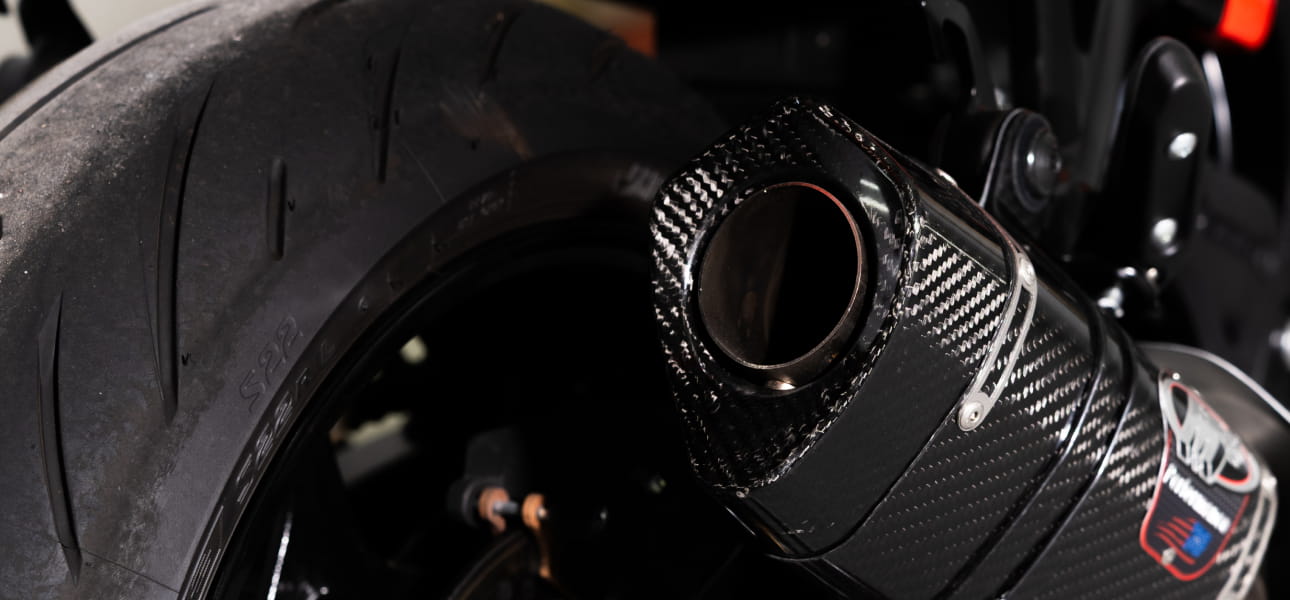
Silencer / can — Surface dents on aluminium cans can often be worked out. Severe crush damage or a split seam usually means replacement of the can. Carbon fibre cans that are cracked through are not safely repairable and must be replaced.
-
Mounting brackets — Broken or bent mounts can almost always be repaired or fabricated. This is frequently cheaper than sourcing replacement exhaust hardware, particularly for older or niche models.
-
Titanium systems — Titanium is weldable but requires specialist TIG welding with appropriate gas shielding. Very few workshops have the capability. Repair is often preferable given the cost of replacement.
"
A $2,000 Akrapovic slip-on with a surface dent doesn't need to be written off. In most cases we can work the dent out and refinish the can. The result is invisible and the rider keeps their investment. Replacement should be the last resort, not the first.
— Rod Seddon, Owner & Director, Melbourne Motorcycle Fairings
WHEN REPLACEMENT IS THE RIGHT ANSWER
There are situations where repair genuinely isn't viable. Collapsed sections that have significantly reduced pipe diameter will affect exhaust flow and therefore engine performance. A cracked carbon fibre can is a safety issue under heat and vibration. And for budget OEM systems, the cost of specialist repair can exceed the cost of a new or quality used replacement. Being honest about this distinction is part of our process.
- Collapsed or severely kinked pipes that restrict gas flow cannot be repaired to original spec
- Cracked carbon fibre cans present a safety risk and must be replaced
- Heavily corroded mild steel systems where repair would only address cosmetics, not structural integrity
- Budget OEM systems where the repair cost exceeds the replacement cost of a new or used part
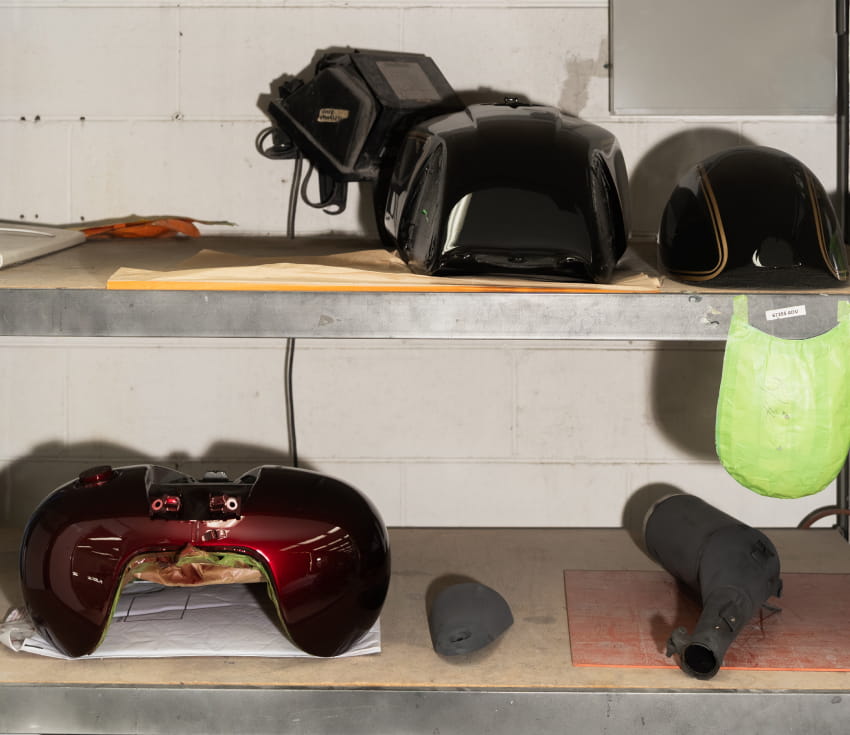
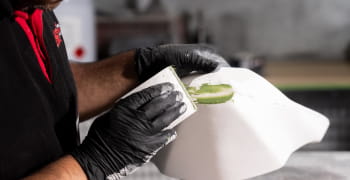
Surface finishing after repair — dent removal and heat-resistant coating on a steel header.
EXHAUST REFINISHING AFTER REPAIR
Once a repair is complete, the exhaust surface needs to be refinished. Standard automotive paint cannot be used on exhaust components — the heat will burn it off. Exhaust sections require either high-temperature ceramic coating, exhaust-specific wrapping, or polishing, depending on the original finish of the system. We handle all of these in-house and advise on the best finish for each exhaust type.
Insurance and Exhaust Repairs
If your exhaust is damaged in an at-fault or comprehensive claim, it should be covered. Make sure to specifically include exhaust damage in your damage report when lodging — it's easy to overlook when fairings and frame damage are more obvious. Aftermarket exhaust systems may require documentation of their value (receipt or current market price) to be assessed correctly by your insurer.
- Document exhaust damage with photographs before anything is moved or cleaned
- Include the brand and model of aftermarket exhausts in your claim to ensure correct valuation
- Ask your repairer to include exhaust repair or replacement in their written quote to the insurer
Written by
Rod Seddon
Owner & Director — Melbourne Motorcycle Fairings
Rod has repaired and refinished hundreds of motorcycle exhaust systems over his career, from budget OEM headers to high-end titanium slip-ons. He takes a practical, honest approach to every assessment.
 Mon - Fri: 8:00 am - 4:30 pm
 Factory: 14 / 59, Hudsons Road, Spotswood
 info@melbournemotorcyclefairings.com.au